Tenor sub brings a welcome Puccini reunion in Met’s opening-cast “Bohème”
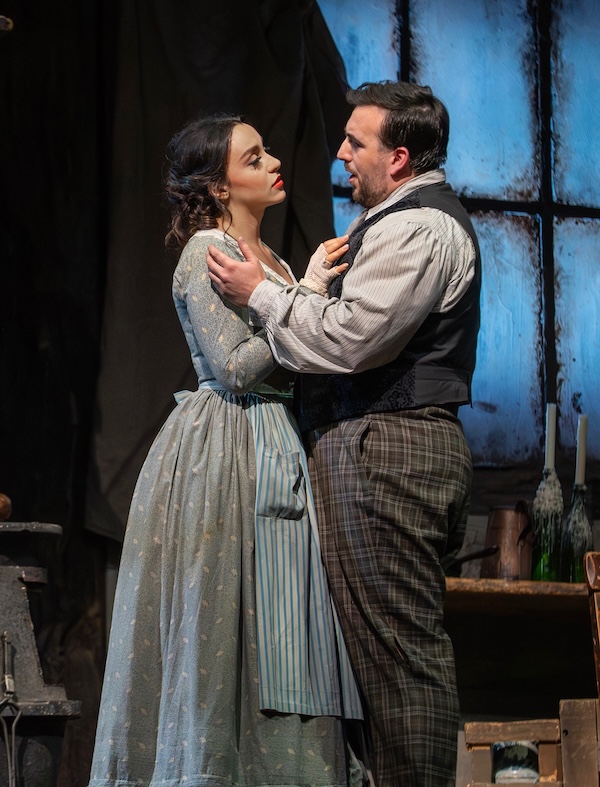
La Bohème doesn’t call for a Heldentenor.
Not in the Wagnerian sense, anyway. But tenor Freddie De Tommaso was definitely a hero to the Metropolitan Opera Friday night as, despite being already scheduled to sing Macduff in Verdi’s Macbeth the following night, he stepped in for an ailing Stephen Costello with a compelling performance as Rodolfo in Puccini’s opera
Of course there’s hardly an operatic tenor that doesn’t have a Rodolfo somewhere in his bag, but Friday’s performance was no improvised substitution. It was, instead, one of those “together again” moments, recreating last season’s well-received matchup of De Tommaso with Juliana Grigoryan as Mimì, which, then as now, made Puccini’s story of doomed love speak volumes.
The familiar Franco Zeffirelli production, dating back to 1981, made its 2026-27 season debut in a fresh coat of paint, with sets refurbished with funding from Met supporter C. Graham Berwind, III. But not to worry—the bohemians’ Paris garret didn’t lose an ounce of seediness in the process.
Friday’s cast proved vocally fresh as well, beginning with the opening scene for bantering roommates Marcello and Rodolfo, with Hansung Yoo’s clear, forceful baritone matched and then some by tenor De Tommaso’s rich lower register. The arrival of Gihoon Kim as Schaunard and Le Bu as Colline completed the roommate quartet with the former’s quicksilver light baritone and the latter’s sepulchral bass.
Of course, the hijinks of the bohemians were just a prelude to Act I’s main event: the blossoming love between Rodolfo and Mimì, expressed in his tender inflections and vigorous high notes in “Che gelida manina” and her shy demeanor and silvery tone in “Sì, mi chiamano Mimì.”
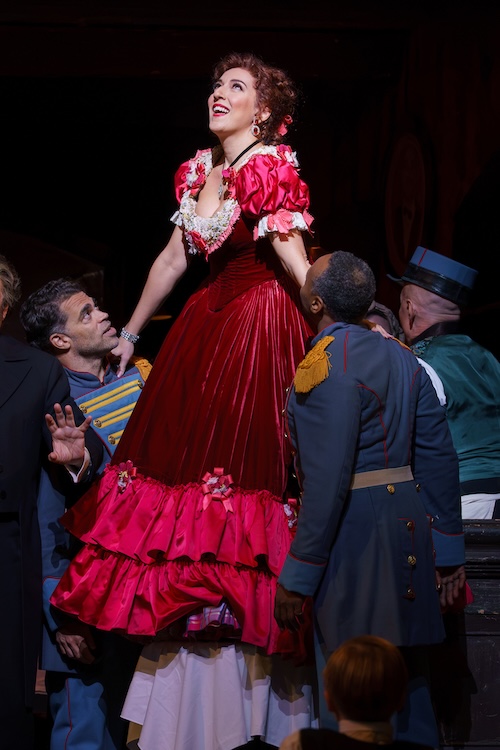
There were notable vocal moments even amid the hubbub of Act II, with its milling crowds, live animals and military band. No doubt the Met Chorus could by now sing this scene upside down and backward, but director Tilman Michael kept them on their toes. Rosa Feola as Musetta had every advantage—a bright red dress, flirtatious blocking, strong chorus men to lift her high—but was somewhat outshone vocally by the “fragile” Mimì sitting at a café table.
When one thinks about it, the real test of singing prowess in this opera is the snowy Act III–the adagio movement if you will—in which, with crowd scenes and comic action pushed into a tavern off stage, the main characters simply stand and sing to each other about their fears and wishes and desires. Here was where De Tommaso’s mastery of nuance and Grigoryan’s dialing her voice from inmost pianissimo to full-throated longing made the text come palpably to life.
Act IV was of course occupied with Mimì’s decline and death, feelingly enacted by Grigoryan as she rose to one passionate moment of happiness remembered before expiring. But other notable moments included Feola as a chastened Musetta uttering a pianissimo prayer over the dying girl and Le Bu as Colline bidding a warm farewell to his coat, pawned to buy medicine for Mimì. (Colline means “hill” in French, and the burly singer indeed cut a mountainous figure in that coat, making their parting that much more touching.)
Donald Maxwell was once again a welcome doubly comic presence, bamboozled by the bohemians as the susceptible landlord Benoît in Act I and strung along by Musetta as the lovesick, elderly Alcindoro in the café in Act II.
Conductor Ramon Tebar, in his Met debut, led the orchestra with sweeping, lyrical gestures in what came out as a rather discreet performance, nuanced closely with the singers, yet still capable of hurling Puccini’s thunderbolt sforzandi.
La Bohème will run through October 31 with Stephen Costello or Adam Smith as Rodolfo and Kristina Mkhitaryan as Mimì in some later performances. Additional runs of La Bohème with different casts begin November 24 and April 16, 2027. metopera.org
Leave a Comment