Alternate cast keeps the romance and comedy alight in Met’s “Bohème”
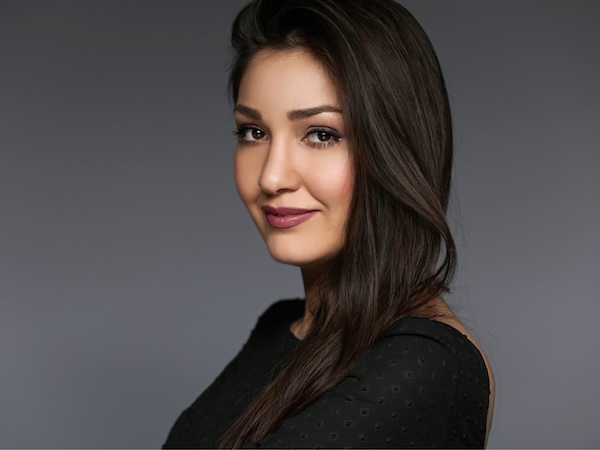
A fresh Mimì joined the revolving cast of Bohemians in the newly refurbished Franco Zeffirelli production of Puccini’s classic at the Metropolitan Opera on Friday. Kristina Mkhitaryan, however, is no stranger to Met audiences in La Bohème, having sung Musetta in the 2023–24 season before returning as Mimì in March 2025.
Mkhitaryan is a soulful, raven-haired Mimì, her dark-hued voice filling Puccini’s soaring vocal lines with ease and emotion. In the opening scene, she is a prankster, eagerly blowing out her candle, just as Adam Smith’s Rodolfo does, though neither can see the other.
In her first-act aria, Mkhitaryan’s soprano bloomed beautifully as she sang of her life and its simple joys. The lovers expressed their newfound love in an impassioned “O soave fanciulla,” their voices intertwining rapturously before joining on the climactic high note as they leave for Café Momus.
The third act found Mkhitaryan at her most compelling. Her rich, jewel-like timbre conveyed Mimì’s sorrow at the prospect of separation from Rodolfo, while their agreement to remain together until spring brought renewed warmth and intensity. When Mimì returned to Rodolfo’s garret to die, Mkhitaryan suffused her final expressions of hope and love with a poignant glow, her voice mirroring Mimì’s waning life force.
Smith was fully at home as Rodolfo, alternating with Freddie De Tommaso, who initially stepped in for an ailing Stephen Costello. (De Tommaso is also singing Macduff in the Met’s new production of Verdi’s Macbeth, and a gap in the schedule allowed him to take on the two additional performances.)
In Act I, Smith’s full, lyrical tenor brought warmth and ardor to Rodolfo. As with Mkhitaryan’s Mimì, his portrayal gained in power and complexity as Rodolfo’s volatile temper came into sharper focus in Act III, culminating in their final duet, where Smith’s voice displayed an impressive spinto edge.
Making her Met debut, Russian soprano Inna Demenkova quickly won over the audience as Musetta. Anthony Clark Evans was a hearty, warmhearted Marcello, his robust presence and voice contrasting with Demenkova’s spitfire temptress. Vocal brilliance and fiery temperament gave way to tenderness in Act IV, her voice becoming an instrument of compassion.
William Guanbo Su’s Colline was firmly grounded in reality, rather than adrift in philosophical reverie. His velvety bass lent poignancy to the philosopher’s farewell to his overcoat.
The liveliest and most engaging of the lot was Ricardo José Rivera’s Schaunard. The baritone has real charisma, a voice that demands attention, and a flair for comedy. His description of the parrot’s demise in Act I was as vivid as his dance moves in the final one.
Donald Maxwell all but owns the dual roles of Benoît and Alcindoro, but Met veteran Richard Bernstein made his own mark. Bernstein dispensed with the fussiness and fustiness often associated with both characters, instilling them instead with a sly, if shy, virility. His rubber-faced expressions and resonant voice made both roles memorable.
Ramón Tebar is making his Met debut with this run of La bohème performances. He shapes the drama with a keen sense of balance and pacing and, while never overly indulgent, gives the singers ample room for expressive nuance. The Met chorus and orchestra were at their commanding best, bringing fresh energy and excitement to each performance.
La Bohème will run through October 31 with Freddie De Tommaso and Adam Smith alternating as Rodolfo and Juliana Grigoryan and Kristina Mkhitaryan as Mimì. Additional runs of La Bohème with different casts begin November 24 and April 16, 2027. metopera.org
Leave a Comment