Yoncheva, Spyres provide adrenaline injection to Met’s “Medea” revival
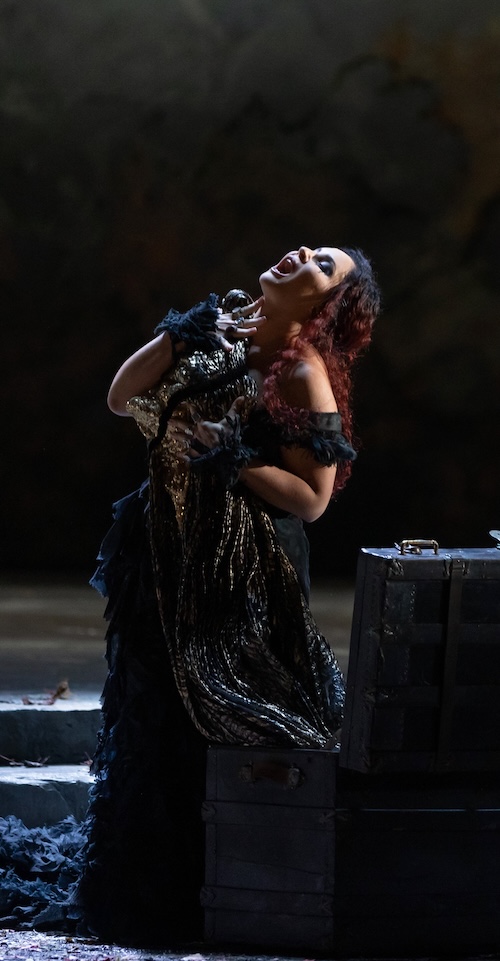
Four years ago the Metropolitan Opera opened its season with Cherubini’s Medea with Sondra Radvanovsky in the title role and Matthew Polenzani as Giasone, in a production directed by Sir David McVicar.
The production returned Friday evening with an arguably starrier cast, led by Sonya Yoncheva and Michael Spyres. The Met’s website listed the performance as sold out. Not bad for a revival of a relative obscurity.
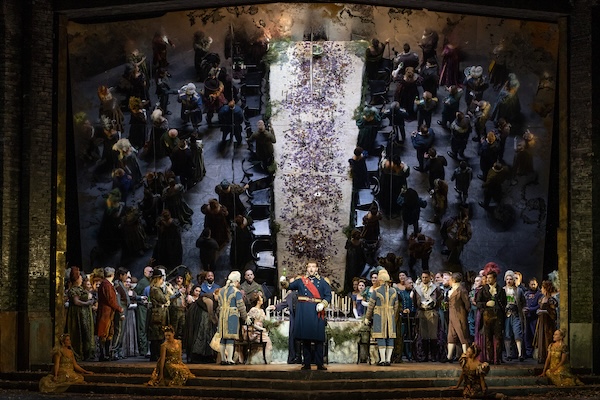
McVicar’s production is a classic of simplicity and beauty. Monumental gates of aged gold evoke Corinth’s grandeur while keeping Medea—a foreigner and outcast who betrayed her family and homeland for Jason—apart from Giasone and their children. The gates part to reveal sumptuous scenes, from Glauce’s anxious wedding preparations to a magnificent banquet and the ceremony itself. All are reflected in an enormous mirror suspended above the stage. Seldom has such opulence been achieved with so little.
Late-eighteenth-century costumes add to the splendor: richly colored gowns for the women and military uniforms for the men. But this world crumbles as Medea turns vengeful and murderous. The mirror reveals Glauce writhing in agony in the bloodstained headpiece and robe Medea sent as a lethal wedding gift. When Medea appears bloodstained to tell Giasone she has killed their sons, their bodies lie lifeless on a bare black stage. She then joins them as roaring flames consume the temple in an inferno worthy of Wagner’s Götterdämmerung.
Yoncheva conveyed Medea’s dramatic intensity through detail rather than histrionics. Her interactions with Giasone, Creonte, and even her confidante Néris revealed a woman bent on revenge—cool, calculating, and lethal. Once Medea resolves to act, the venom coursing through her registers in Yoncheva’s face, especially in her eyes. With her revenge exacted, Medea seems freed from the demons that consumed her. She may not be absolved, but Yoncheva’s noble bearing in the final moments suggests she has found a measure of peace.
Yoncheva’s sumptuous soprano adds another dimension to her portrayal. In the opening confrontation with Giasone, her vocal colors shift from warmth to icy fury, while her voice inspires awe as it soars into the house. She sustains this blend of vulnerability and defiance in her encounters with Giasone, Creonte, and Néris. Reunited with her sons, she sings with glowing maternal warmth, momentarily hesitating to carry out her plan. Unbridled rage returns in her final curse flung at Giasone.
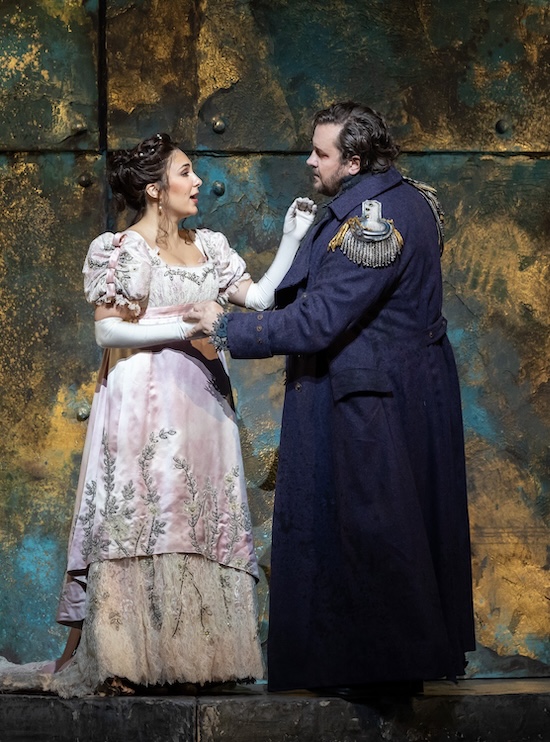
Michael Spyres’s clarion-voiced tenor endowed Giasone with heroism but could not redeem this otherwise despicable character. His success in obtaining the Golden Fleece rested largely on Medea’s love, ruthlessness, and sorcery. Any acknowledgment of that debt, or of his former love for her, was intermittent and begrudging. Spyres matched Yoncheva’s intensity with exhilarating vocal sword-thrusts. In the final scene, his physical and vocal unraveling demonstrated the dramatic power of understatement.
Greek bass Alexandros Stavrakakis’s robust physique and youthful bearing made for an imposing Crotone. More imposing than paternal in manner and voice, he brought an impressive, expansive bass to the role. His confrontation with Yoncheva was less explosive than Spyres’s, but equally impassioned.
The evening’s surprise was Russian mezzo-soprano Victoria Karkacheva’s house debut as Néris. Her alert stage presence and distinctive voice marked her as an artist of distinction. Cherubini gave Néris one of the opera’s most moving lyrical passages in “Solo un pianto con te versare.” A piquant bassoon obbligato wove through the vocal line as Karkacheva conveyed Néris’s compassion and willingness to share Medea’s suffering. The audience’s response suggested that a new Met favorite was in the making.
Elena Villalón was an affecting Glauce, capturing the conflicted young woman’s doubts and hopes for happiness in her Act I aria, “O Amore, vieni a me,” one of the opera’s other truly lyrical passages. Villalón’s silvery soprano blended beautifully with the quick, flute obbligato, evoking Glauce’s innocence. Her coloratura was equally fine, apart from a brief passage in which she and the flute fell out of sync, a momentary lapse unlikely to recur.
Caitlin Gotimer, an American soprano from Long Island whose career is gaining international momentum, also made her Met debut as one of the two Handmaidens. After a tentative start, her voice bloomed in size and color. Her companion, Erin Wagner, commanded attention from the outset.
Carlo Rizzi, who conducted the production’s original run, brought experience and sensitivity to this gripping performance.
McVicar wisely let the music speak for itself in the Act I Overture and Act III introduction, allowing Rizzi to bring out Cherubini’s mastery of orchestral color and texture while conveying the music’s expansive emotional range. Cherubini also integrated the chorus into the dramatic tableaux, most impressively in the Act II wedding festivities, where Rizzi brought chorus, soloists, and orchestra together in a joyous celebration that momentarily masked Medea’s plans for revenge.
Medea continues through November 21. Chiara Isotton replaces Yoncheva for the final performance. metopera.org
Leave a Comment