He’s got a heavy Liszt: Massed etudes vie with subtle colors in Youl Sun recital
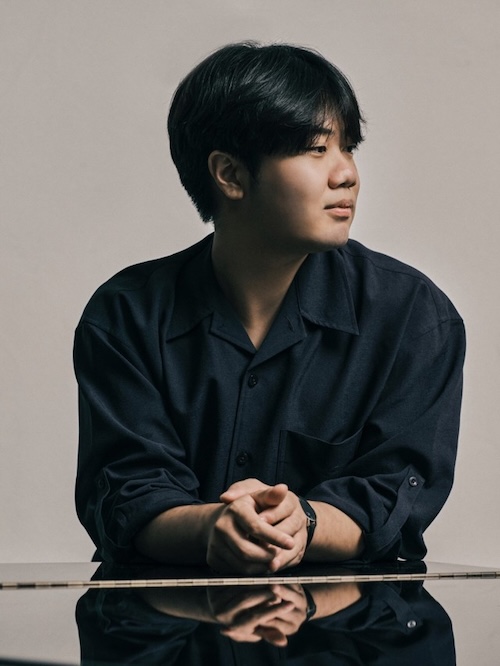
After the first half of Thursday night’s recital in Carnegie’s Zankel Hall, it seemed that impressionism was pianist Youl Sun’s happy place.
The gold medalist at the 2024 Gina Bachauer International Artists Piano Competition coaxed misty and glowing sounds from the big box of hammers and strings as he conjured the musical visions of Gabriela Lena Frank, Texu Kim and Claude Debussy. Clearly he had a particular gift for everything vaporous and elusive in music.
By program’s end, after an arduous traversal of all 12 of Liszt’s Transcendental Etudes, that initial impression hadn’t changed. Despite an astounding technique that allowed him to dispatch these pieces’ notorious difficulties with a wave of his hand, and despite many sparks of imagination along the way, one couldn’t help feeling that this artful pianist had allowed Liszt the Insufferable Blowhard to crash a promising recital.
This sort of athletic exhibition is an essential (but of course not sufficient) factor in winning competitions like the Salt Lake City-based Bachauer, which includes a New York recital as part of its Gold Medal prize. Except for demonstrating the pianist’s stamina—and testing that of his audience—it would have sufficed Thursday to select a few of the higher-quality pieces in this uneven set, or to pick less familiar ones to make a case for, rather than subject listeners to a solid hour of roaring octaves and cascading scales.
In contrast, Frank’s Two Andean Portraits, composed for the 2024 Bachauer Competition, posed far subtler tests of pianistic skill. The first movement, “Introduction: Zampoñas,” inspired by Peruvian panpipes, had the fresh-air feel of a sunny Debussy prelude, but under its tuneful surface lay the challenges of playing fifths legato and a wide-skipping left hand, which Sun met with easy grace. “Adagio del Altiplano” suggested a lonely monologue in high country amid swirls of wind, which spun into keyboard-spanning arpeggios in the middle, requiring deft pedaling to keep them airborne.
Pansori Fantasy by the Korean-American composer Kim evoked a traditional art of storytelling for a singer accompanied by a drum, beginning with a scene of puckish humor right out of Debussy’s vaudeville pieces, with enigmatic comments at the extreme high and low ends of the keyboard. The sense of fantasy increased as the pansori singer’s voice swelled to a Lisztian fortissimo with jazzy rhythms, then dwindled to a pianissimo close amid staccato note-clusters.
Sun then turned from composers influenced by Debussy to the man himself and his two books of Images. “Reflets dans l’eau” (Reflections in the water), perhaps the touchstone piece for impressionism in piano music, undulated placidly as it should, but also revealed a deficiency in Sun’s touch palette: droplets that didn’t “ping” as they disturbed the water’s glassy surface. And as the waters were stirred up at mid-piece, one wished for more layers of tone color.
“Hommage à Rameau” didn’t imitate that Baroque composer’s style at all, but reflected leisurely and at length, maybe a little too long. The racing clockwork of “Mouvement” got the impressionistic treatment, with generous pedal blurring its cogs and wheels and the tart comments sliding by.
Turning to Book II, the sensorily mixed image of “Cloches à travers les feuilles” (Bells through the leaves) produced a rather enigmatic piece, which Sun successfully navigated with bell-like top tones and rustling middle voices, whipped to a roar in the brief middle section.
“Et la lune descend sur le temple qui fut” (And the moon descends over the temple that was) captured a rapt nocturnal moment in legato phrases, and yet would have benefited from more focus and sense of direction than Sun gave it. Debussy’s “Poissons d’Or” are not the goldfish swimming in your bowl at home, but legendary creatures with magical powers, and in Sun’s performance the light off their scales was dazzling as they swam powerfully up and down the keyboard.
As previously suggested, Sun might have succeeded in a select group of Liszt etudes, chosen for contrasting character. His mastery of the pieces’ technical demands was indisputable, and his hand on the tiller of musical ebb and flow was assured.
But without more resources of tone color, and a willingness to back off and throw the changeup now and then, it was hard to keep this group of 12 pieces from congealing into an indigestible mass. Unfortunately, Franz Liszt seems never to have met a pretty little tune that he didn’t want to bring back later in fortissimo chords and an avalanche of octaves. When the bass starts to rumble and the scales start to plunge from on high, it takes a resourceful pianist to head off that oh-no-here-it-comes-again response in the listener.
A taste of this recital’s “might have been” came in some of the more familiar etudes, where Sun scored notable successes. Etude No. 4, “Mazeppa,” inspired by Byron’s poem of a hero punished for adultery by tying him to a galloping wild horse, unfolded in sweeping passages of unforced fortissimo, shot through with notes of heroic suffering, dramatically conveyed. No. 5, “Feux follets,” was extremely fast, insubstantial, yet well shaped, the wispiest “will-o’-the-wisp” imaginable.
No. 9, “Ricordanza” (Remembrance) glowed with Sun’s fine sense of expressive timing and rubato, and an exquisitely leggiero touch in arpeggios. No. 10 in F minor, with no title but marked Allegro agitato molto, was all that and more, its shuddering hand-trills becoming ultra-fast shivers, its arpeggios lightning flashes, its turbulence a hellish storm. This was virtuosity not for its own sake, but at the service of a fierce interpretation beyond the reach of most pianists.
Leave a Comment