Morton Feldman squarely in the mainstream at Graphic Content Festival
Can you play Morton Feldman’s chamber music the way you’d play, say, that of Schubert? Does it make sense to do such a thing?
The answer to both questions is an easy “yes,” and any doubts anyone might have were obliterated by Friday night’s opening concert of the Graphic Content Festival, which took place at St. Michael’s Church on the Upper West Side.
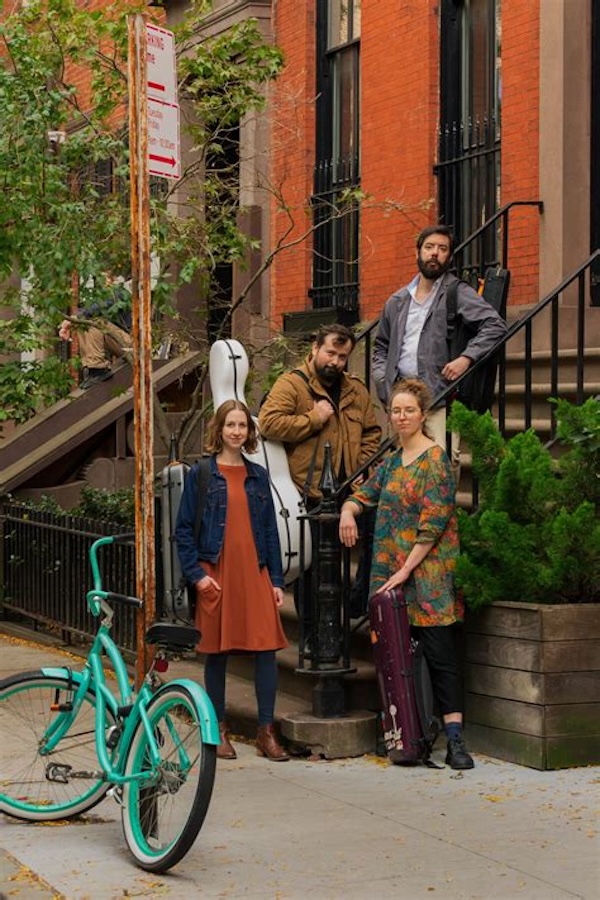
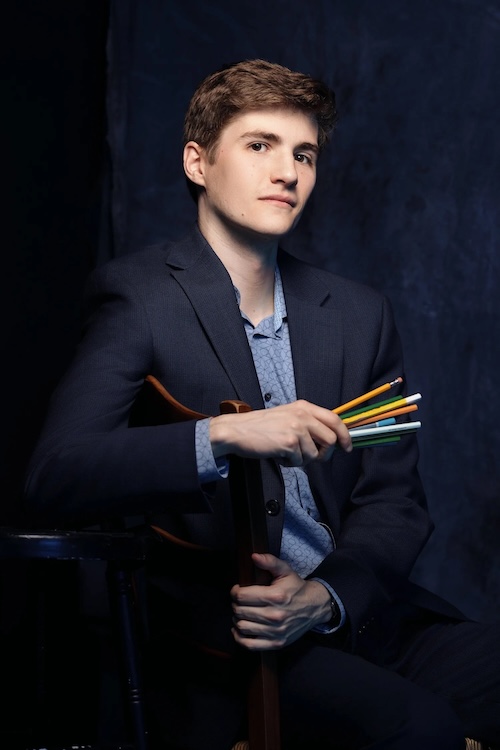
Organized by musician Steve Long and honoring the dual centennials of Feldman and his New York School colleague Earle Brown, pianist Matthew Schultheis and the Orange Road Quartet launched the evening with an utterly beautiful, emotionally rich performance of Piano and String Quartet.
The quiet, placid surfaces, the calming pace, the sonorities are all beautiful in and of themselves as sounds and experiences. Emotionally rich might be surprising— not because Feldman’s music is unemotional but that his work and the way it has been played often fall into the faux objectivity around so much avant-garde and experimental classical music. It’s as if the point is to play the music like architectural drawings, blueprints, showing all the structural details while overlooking any expression Feldman may have been conveying.
In the past 70+ years, classical music has moved to incorporate the frontier Feldman staked out, and then proceeded onward. His early work in graphic notation and indeterminacy (and Brown’s) experimented with the possibilities of the classical tradition, but by the time he composed Piano and String Quartet in 1985, he had established where classical music was, and not the edge but the core. He is now part of the core (and also, arguably, of ambient music, and certainly has many listeners outside of classical).
Schultheis and the quartet (violinists Miguel Calleja and Lauren Conroy, violist Dudley Raine IV, and cellist Jordan Bartow) played with this understanding, recognizing that Feldman’s chamber music is part of the extended 19th-century chamber tradition. Technically, that meant fine and sensitive attention to details of phrasing, rhythm, and dynamics.
It also meant gorgeous timbres and intonation in the strings, an exacting and secure pulse with careful and refined attention to the rests between each unit of repeated musical material, and a palpable emotional direction to the performance. Feldman being Feldman, the silent spaces illuminated the expressive possibilities as much as the sounds did.
This was a 70-plus minute performance, an ideal duration, and in the last 15 minutes or so the music felt like it was first approaching and then inside of a clear coda. This was a scintillating feature atypical from many past Feldman performances—and one got the impression these young musicians represent a new generations way of hearing the music and seeing its place in history.
Their playing opened up new dimensions. In the final section, the musicians glided through a clear, graceful triple-meter pulse, the strong feeling of a consistent down beat and the increasing frequency of major chords produced a transformed mood. The feeling was the sunny, rich end of an emotional narrative that began in contemplative inner space.
Storytelling in the abstract was part of this performance. Dancer Annie Nikunen added simple and evocative choreography, moving slowly up and down the aisle, appearing in the wings, then on a balcony. Along with her steps, she carved slow, repeated gestures with one arm, at times dropping petals from a white rose, and her poses and the black dress she wore had on thinking of Sergeant’s famous painting Madame X.
On paper, that’s an ahistorical juxtaposition—Feldman, whose involvement in other genres was focued on visual art with contemporaries like Philip Guston. But live performances of old music can collapse time so that the past becomes the present. And as the dancing had one thinking of classic painting, so the playing had one thinking of late Schubert, like the G Major String Quartet, D. 887. Piano and String Quartet is built on the foundation of music like late Schubert, and is a step further into the possibilities of the future.
Centennials are big deals with built-in reasons to present things that aren’t in mainstream institutional planning. But Feldman is now the mainstream and has been for a while. The Graphic Content Festival is, on the evidence of Friday night, merely putting the core repertoire in front of audiences. Would that more organizations are doing so.
The Graphic Content Festival runs through November 21. Violinist Conrad Harris, cellist Alex Waterman, and pianist Stephen Gosling play Morton Feldman’s Trio, 7:30 p.m. Saturday steve-long.com.
Leave a Comment