Grossman Ensemble provides a compelling trek through modernism at TIME:SPANS
Concert programs are frequently organized around a theme, some historical or aesthetic idea that relates each piece of music to the others. This is true as frequently for new music, where concerts are often presented as a demonstration of new concepts and movements.
So it was no surprise that the TIME:SPANS festival concert in the DiMenna Center Saturday night had a set of pieces with a relationship to each other. What was out of the ordinary was the exuberant fit, how five different works created independently could establish an interlocking relationship that went beyond the notes themselves to an abstract but large-scale idea. That made this one of the finest experiences one has had at this annual event.
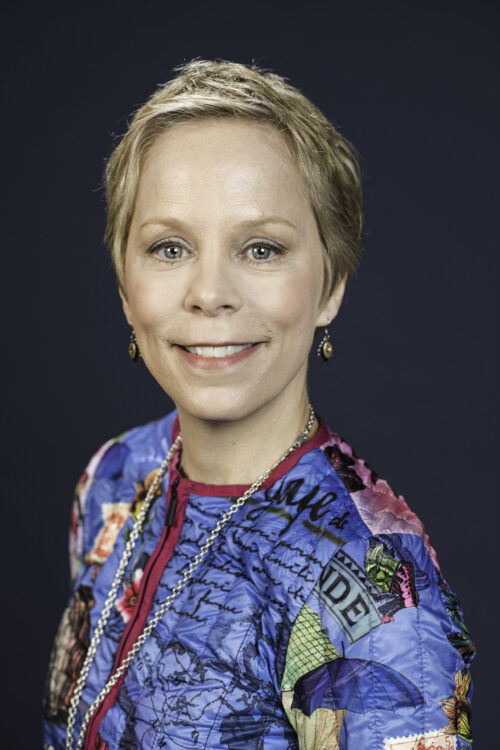
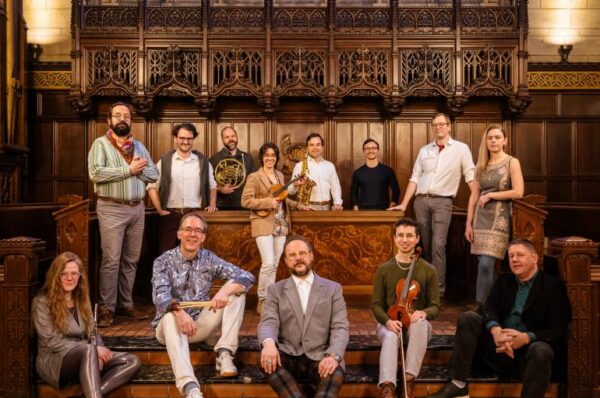
What was responsible for this exceptional, seamless expansiveness was the presence of composer Augusta Read Thomas. Her Solstice Ritual—Hommage to Varèse and Ravel, the last of five works, shared a musical DNA foundation with the others. In a real sense, Thomas was mother to all—she is the founder and director of the evening’s performers, the Grossman Ensemble, both resident at the Chicago Center for Contemporary Composition at the University of Chicago.
One has grown wary of the continued hold universities and conservatories have on contemporary classical composition in the United States, which often still suffer from the mid-20th establishment of music as a research subject. But Thomas is an energetic, communicative composer, and that value was shared throughout the program. She also dedicates deep and intense workshopping and rehearsals to the music the Grossman commissions and these performances. Timothy Weiss conducted with relaxed command, the feeling not only of instrumental virtuosity but the kind of second-nature familiarity one hears when an orchestra plays Beethoven.
Thomas had Varèse and Ravel in her title and that spoke for colorful and sensitive orchestrations and attention to timbre in her piece. With the ensemble augmented to four percussionists, there was a thread of Messiaen running through both the rhythms and the feeling of an exalted ritual that culminated in the feeling that the listener was being prepared for something grand.
Thomas’s Solstice Ritual was a fine bookend to Melinda Wagner’s Limbic Fragments. This was gleeful music, not only in the bright, Third-Stream rhythms at the start (Wagner casting an eye on some under-appreciated history), but the general vivaciousness and quick-changing phrases, like Carl Stalling’s music for Warner Brothers cartoons. There were moments when a rush of notes seemed to hang and gradually run down, like Coyote’s legs spinning in empty air before he’s about to plummet.
Sean Shepherd’s Simple Machines—Air, Churn, Hover had a more formal shape, with an intro and three sections. It was steady, with Shepherd organizing things around some basic musical techniques, turning them inside out to see their possibilities. That made for variety and also impressive craft and imagination, with gorgeous major and minor chords that shaded the basic triads in uncanny ways, and fast passages that sounded like a spider skittering up a drainpipe.
Colors, shapes, lines, this was all like going to a museum and walking through the galleries from Renoir to Matisse to Kandinsky. Ramon Lazkano described his A Glitch at the Edge as a “fragment,” perhaps a piece of a shattered kaleidoscope, the shards twisting and arcing through the air, still refracting light. It had an intriguing disorienting sound, like the notes were holding a tenuous balance, with maybe some veiled memories of The Rite of Spring.
There was a painter also hidden within Frédéric Durieux’s Theater of Shadows I, music dedicated on the death of Christian Boltanski. This was atmospheric—dense but not weighty—from the variety of complex hues. There was a subtle, narrative shape, Durieux creating the impression of how one of Boltanski’s installations turned and moved through time, before also winding down. With Thomas’s music, this program presented a superb and concise history of modernism.
The TIME:SPANS festival continues through August 22. timespans.org
Leave a Comment