Juilliard musicians fete Glass with exhilarating concert of rarities
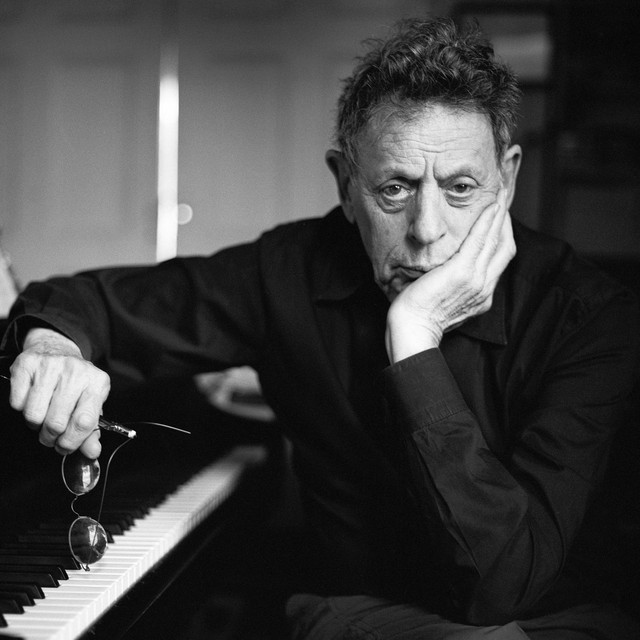
Witnessing classical music culture catch up to and encompass Philip Glass into the mainstream of the tradition has been one of the more rewarding experiences for a music lover in recent decades.
Glass was first an avant-gardist, because someone has to be out in front exploring new territory into which a tradition grows. But once he establish his fundamental rhythmic and structural practice, he has been working inside classical music in the most basic sense of shaping pieces through harmony, counterpoint, and voice leading. Modernism means reviving old language for contemporary eras, and Glass is one of the greatest modernists, heard in the concert halls, opera houses, and movie theaters.
Still, there is a lot of his music that is rarely played. That is largely because he wrote it before he became an accepted figure, and in these early pieces he was working with his Philip Glass Ensemble in an unconventional notation that he and his musicians understood. Some of this music has been adopted by other groups, but with the Ensemble’s future uncertain it’s an open question how much of this music will survive.
That was the unstated context to the Juilliard School’s concert Tuesday night at Zankel Hall. An explicit celebration of Glass, the concert program, curated by composer Nico Muhly and violist Nadia Sirota, and played by Juilliard students (with Muhly and Sirota occasionally sitting in), was dense with music that originated with Glass’ Ensemble. It was an exhilarating, beautiful, and moving experience.
The immediate pleasure of the concert was hearing music rarely played—in exceptional arrangements from Muhly for mixed ensembles of winds, strings, and keyboards—or that has been lost to discographical obscurity.
The concert opened with Metamorphosis No. 4 and two movements from String Quartet No. 5—these accompanied dancer Lexie Elliott performing choreography by Bobbi Jene Smith and Or Schraiber that seemed a representation of struggle, mixing fluid and angular motions. The meat of the program had excerpts from Glass’ gorgeous Étoile polaire film score; from the collaborations with Robert Wilson, CIVIL warS and Monsters of Grace; and finished with Gandhi’s Final Aria from Satyagraha—transcribed for viola—and “Knee Play 5,” the last scene from Einstein on the Beach. There was one work in its original form, Dance No. 1, for wordless soprano, flutes, and keyboards.
This was a self-recommending list of masterpieces, the kind of music, like a Beethoven sonata, where a solid performance is all that’s needed to a fulfilling experience. And there was a touch of Beethoven in the way pianist Yuval Hen played Metamorphosis No. 4, fast and with a slightly pointillist articulation. Rather than a discrete curtain-raiser, that opened up the historically powerful context for the concert. Sirota and Muhly got at this indirectly, in their introductory remarks with Damian Woetzel, that these Juilliard students were stepping out of their normal repertoire and testing out a very different idea of endurance in concentration and technique.
In other words, a new generation of classical musicians was learning and playing music that had been one ensemble’s speciality, and by doing so were bringing the classical tradition even farther into Glass’ territory. All the notes and phrases had a profound sense of past and future around them. And the playing, except for some mis-coordination in the “Are Years What?” section from Étoile polaire, was terrific. The students didn’t just hold their endurance, but shaped each phrase like it belonged in the same world as Glass’ beloved Schubert.
The scenes from CIVIL warS and Knee Play 5 are centered around dramatic texts, Maita di Niscemi’s dazzling, Ashberry-like stream of random non sequiturs in the former and Samuel M. Johnson’s touching soliloquy on love from the latter. Young actor Jawuan Hill delivered each. He had poised, shining charisma in these exposed and subtly difficult parts, and the light touch and energy of someone with absolute relish for what they were doing.
Though the concert featured a rotating group of performers, as Hill delivered the Knee Play lines, all the remaining musicians slowly came out on stage, the string players passing off their melodic parts to the new arrivals. It was an expansive and soulful gesture, young people looking toward the future.
The Kronos Quartet plays new and traditional music, 7:30 p.m. April 25 in Zankel Hall. carnegie.org
Leave a Comment