Young soprano sparks enjoyable ACO program
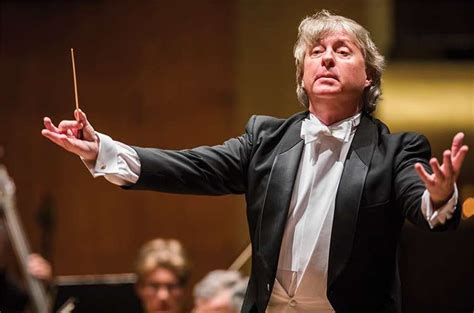
Epiphany is the season of the Morning Star, symbolizing hope, new beginnings, and the coming of light. Thomas Crawford, founder and artistic director of the American Classical Orchestra, is a church musician. He undoubtedly had these themes in the back of his mind when casting for a title for the ACO’s first concert of the New Year at Alice Tully Hall on Thursday evening. The stars he had in mind were of a different sort.
Rather than references to an astral phenomenon, Crawford programmed works by Boccherini, Mozart, and Haydn in a concert entitled “Morning Stars.” Few musical lights have burned brighter or more prolifically than those of these three composers, varying lengths of life notwithstanding. These pieces are from the early years of their careers, when all was new and ripe for discovery. The concert also featured a rising star, the exciting young soprano Song Hee Lee.
The first piece was by the 12-year-old Mozart, the Overture to La finta semplice. Crawford led a buoyant reading of the three-part work. Litheness of tone combined with sensitive phrasing in the opening and closing sections, enlivened by the crisp string attacks and Crawford’s deft touch with dynamics. The middle section was pure charm and grace, propelled by the gentle rhythmic pulses which Crawford coaxed so effortlessly from the players.
Boccherini’s Symphony No. 26 in C minor is a rarity: Crawford had difficulty obtaining the parts for the concert. Dating the Italian composer’s works is equally tricky, but Symphony No. 26 was definitely composed after he moved to Madrid in 1769, in his mid-twenties, and where he spent the rest of his life.
Crawford primed the audience with examples of Boccherini’s compositional ticks played by the orchestra, which include chromaticism, syncopation, and an extraordinary penchant for repeating the same thematic material up to five times in rapid succession.
The Boccherini was notable for its grace and the variety of musical colors Crawford drew from the period instrument ensemble. The best-known movement is the Pastorele-Lentarello, featuring the unusual pairing of oboes and violins, which was lilting and lovely. An even rarer combination of instruments came in the Finale, with principal double bass John Feeney and principal bassoonist Andrew Schwartz engaged in a witty musical dialogue that ended with a resounding low D from the bassoon.
Mozart composed Exsultate, jubilate in Milan while there for performances of his opera Lucio Silla. The four-movement solo motet was composed for the castrato Venanzio Rauzzini, who was performing in Lucio Silla. Crawford led a performance of the original version of the motet, with oboe, while offering a sample of the latter one with flutes, which he seemed to prefer.
Song Hee Lee, still a student at The Juilliard School, soared through Exsultate, jubilate, dispatching Mozart’s coloratura lines with virtuosity, as well as lightness and joy. Her soprano was perfectly even from top to bottom, with each ascending vocal line a model of spinning legato line capped by high notes that blossomed effortlessly. In the recitative passages of the second movement, Lee demonstrated her command of text and legato style. Lee’s singing in the concluding ‘Alleluia’ was brilliant, exuberant, and gorgeous, just as it should be.
Although Haydn composed over 100 symphonies, he only delved into the form in his late twenties, after writing reams of keyboard sonatas, concertos, church music, and such works. Symphony No. 6, “Le Matin,” was one of three, the others being “Le Midi” and “Le Soir,” that premiered in one evening in 1761 at the Esterházy Palace in Vienna.
As she would throughout, principal flutist Sandra Miller delighted, especially in her elegant interplay with principal hornist R.J. Kelley. There was wit throughout the performance, as well as incisive rhythmic thrust and expert turns of dynamics that flowed from Crawford’s benevolent guidance. In the final movement, Miller again shone, as did concertmaster Aisslinn Nosky with her vibrant and flashy playing.
The American Classical Orchestra performs “The Healing Bach” 7:30 p.m. February 26 at Church of St. Vincent Ferrer. aconyc.org
Leave a Comment