Chelsea Chen brings lightness and charm to individual organ program
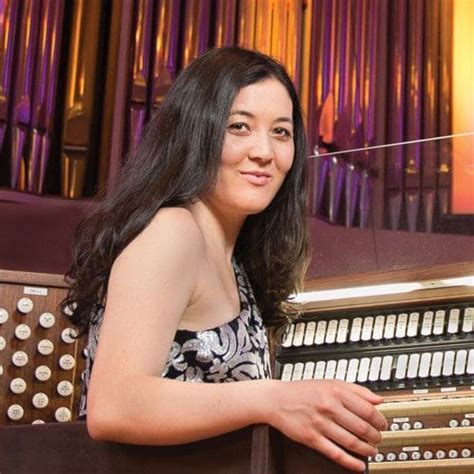
The organ is such an imposing instrument, not just an extraordinary mechanism but often an architectural feature of a grand ecclesiastical space, that an organ recital often carries a lot of weight with it. So the light-footedness and charm of organist Chelsea Chen’s performance Thursday night at Brick Presbyterian Church proved unexpected and a pleasure in itself.
This began and ended with Chen herself, an accomplished San Diego-born musician. And under her hands it was the instrument too, less reedy and dense than usual, at least in the registrations Chen chose. Her multi-varied choices for the program did a lot to determine that. She played ten pieces, mostly shorter ones, and two of her own, music that spanned eras from Bach to this century. This seemed an ideal showcase for Chen’s judgment and artistry.
This burst forth with the opening work, Sinfonietta by Ola Gjeilo. From earlier this century, this was a quick and fast piece, really a toccata. After the opening statement, the main thematic idea moves to the pedals, and the speed and dexterity of Chen’s footwork was dazzling. The music hinted at chord sequences from Bartok’s Concerto for Orchestra, which added a touch of historical resonance.
There were more familiar organ works, with Léon Roques’ transcription of Debussy’s Arabesque No. 2, and Bach’s Chorale Prelude “Kommst du nun, Jesu, vom Himmel herunter,” BWV 650 and Max Reger’s elaborate and more than a little maniacal Chorale-Fantasy on “Hallelujah! Gott zu loben, bleibe meine Seelenfreud!”, Op. 52, No. 3 sandwiching Chen’s Taiwanese Suite. The lyrical fluidity of her playing in the Debussy and Bach was delightful, with excellent tempos, and she built up real intensity in the Reger.
The Taiwanese Suite, and her recent Children’s Dances on the second half, are pieces built out of well-known melodies from Taiwan and China. Chen described the tunes in the three sections of the suite as being so popular that one hears people singing them on the streets in Taiwan, and they have penetrated American culture enough so that her pieces felt both refreshing and familiar. The singing quality in her playing again came through, and also her thinking as an organist, with an ear for flute-like tones and a little more vibrato than one usually hears. Chen showed she has her own sound.
Henri Mulet’s intriguing toccata, Tu es petra, opened the second half with it’s subtly gleeful horror-movie soundtrack stance. It was the darkest piece on the program, and maybe the most fun. Before her Children’s Dances, she played the intriguing minimalist samba Miroir, by Dutch composer Ad Wammes.
At the end, Chen put together a mini-suite of Saint-Saëns, with Alexandre Guilmant’s transcription of “The Swan” from Carnival of the Animals, and David Briggs’ transcription of the finale from the Symphony No. 3, “Organ.” “The Swan” was swoony, but also graceful and never bogged down. The symphony finale was specifically the section of the music that brings in the organ, Chen playing that part along with the accompanying lines from the orchestra, a virtuosic performance of rousing music. One was impressed that despite all that was going on, this never felt as dense as the Reger, a tribute to the composer, the transcriber, and Chen herself.
For an encore, she wrapped up the mood and had everyone smiling with a suite of themes from John Williams’ Star Wars film score. It was a fitting way to finish off an evening that showed how much an artist loves her instrument.
One Response to “Chelsea Chen brings lightness and charm to individual organ program”
Leave a Comment




Posted Jan 16, 2026 at 2:50 pm by AndyHat
Glad to see this get a review. It was such a great show! It’s too bad more people weren’t there to enjoy it.