Israel Philharmonic’s opening concert hits its stride with Zukerman
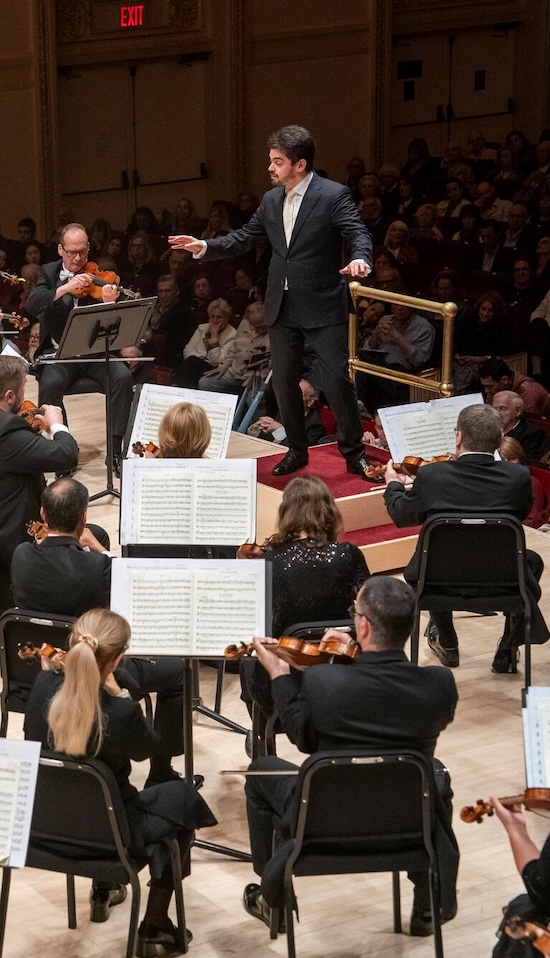
This week’s three-concert series of the Israel Philharmonic Orchestra at Carnegie Hall got off to a shaky start Wednesday night with an unfocused performance of Prokofiev’s Overture on Hebrew Melodies, Op. 34bis, following an unexplained half-hour delay in starting the concert. (Long lines to go through enhanced security outside the hall may have contributed to the wait.)
When conductor Lahav Shani finally gave the downbeat around 8:30, the piece’s plunking accompaniment sounded tentative, but still managed to engulf the solo clarinet playing a klezmer tune. A prayerful cello melody fared a little better, but the performance overall seemed to reflect the composer’s own disdain for the work, dashed off as a favor for some fellow Russian émigrés fleeing the 1917 revolution and orchestrated a decade and a half later.
Things looked up with the arrival of the reliable violinist Pinchas Zukerman to perform Paul Ben-Haim’s Violin Concerto. (The composer, an early pillar of Israeli concert music, will be featured on all three IPO programs this week.) The orchestra found its footing in a vigorous Hindemith-style allegro that reflected the composer’s German origins as much as his adopted Middle Eastern milieu.
Despite a somewhat slender tone overall, Zukerman’s saucy violin danced clear of the robust orchestration, barking low on the G string one moment and skipping in the stratosphere the next, all with precise intonation. The movement’s perfumed soft interludes gave a foretaste of the following Andante affettuoso, an Orientalist concoction of muted strings, flute, and the solo violin singing sweet and high. Zukerman’s malleable line slipped easily into and out of decorative fioritura.
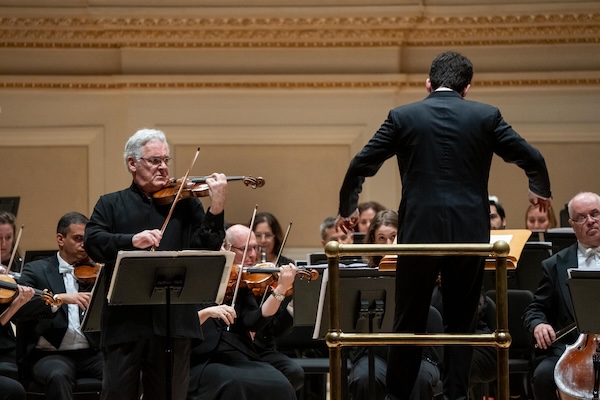
A solo cadenza preceded the finale, showcasing the instrument’s many moods and ways to dazzle from rapid harmonics to left-hand pizzicato to whirling double-stops, all executed with panache. The last movement was a piquantly dissonant dance à la Bartók, colorfully scored yet never covering Zukerman’s violin. After more mesmerizing interludes, an accelerando coda brought the concerto to a sassy conclusion.
Soloist and orchestra responded to the enthusiastic applause with a tender, small-r romantic encore, Ben-Haim’s Berceuse Sfaradite (Sephardic Lullaby).
The week’s IPO concerts also include a survey of Tchaikovsky’s mighty last three symphonies, beginning on Wednesday with the incandescently tragic Fourth. Conductor Shani favored fast tempos throughout the symphony, as if to prevent wallowing in its dark emotions. (But if you can’t wallow in Tchaikovsky, where can you?)
Following a genuinely scary “Fate” fanfare, the first movement’s sighing theme seemed to dance a desperate waltz. A slight rushing and blurred rhythm were cured when the themes returned later, and the development built inexorably to the dire return of “Fate.” And is there any Verdi first-act curtain that can match this movement’s coda for sheer catastrophic force? The orchestra’s breathtaking execution left this listener in awe, but brought applause and even whoops from others in the audience.
The second movement Andantino practiced the Russian art of developing a theme not by pulling it apart but by presenting it whole in various guises—in this case, a soft, watery oboe solo followed by beefy cellos and, later, muted violins decorated with tiny flute skyrockets. Shani and his players emphasized the contrast between these colors, but could have given the whole movement a little more time to bloom. At a fast clip, the pizzicato scherzo rippled and rumbled like waves in the earth. Its chirpy trio for winds and distant marching band kept the humor bubbling.
In other performances, this symphony’s exultant finale can sound like a bit of forced gaiety, an inadequate response to the first movement’s fateful summons. On Wednesday, however, Shani leaned into the score’s indication “con fuoco” (with fire) and cranked up the tempo, so that the movement became a celebration of this orchestra’s tight ensemble and virtuosity, sweeping all before it, including a dramatic reappearance of the “Fate” fanfare. The movement closed in a riotous accelerando that brought the audience to its feet.
On his third return to the stage to acknowledge applause, Shani swung the orchestra into an encore, the high-kicking “Russian Dance” from Tchaikovsky’s Nutcracker.
The Israel Philharmonic Orchestra series at Carnegie Hall continues 8 p.m., Thursday with Lahav Shani conducting works by Bernstein, Ben-Haim and Tchaikovsky. carnegiehall.org
Leave a Comment