Intriguing rarities by Beach and Gipps, admirably served by NY Repertory Orchestra

The New York Repertory Orchestra, with conductor David Leibowitz, opened its season Saturday night at the Church of St. Mary the Virgin with what it does best—resurfacing worthwhile music and composers in the niches of the classical repertoire. These are public-spirited performances that are easy to admire, an all-volunteer orchestra presenting free concerts that are not about any canon but one long, seamless tradition.
For this opening concert the orchestra played the Suite No. 3 from Respighi’s Ancient Airs and Dances, the vocal piece Mary Stuart by Amy Beach—with mezzo-soprano Sarah Nelson Craft—and Ruth Gipps’ Symphony No. 4. This was conservative programming in a meaningful and illuminating way, not protecting the orchestra from failure or an indifferent reaction, but playing music from the traditional mainstream of classical composing that continued throughout the modernist era.
All received solid performances. Respighi’s familiar third suite from his series is for string orchestra, and the NYRO strings had fine intonation and an impeccable balance of warmth and grain in their sound. St. Mary the Virgin is a particularly resonant space, and that made for a satisfying, big sound inside which one could clearly hear Respighi’s contrapuntal lines, his flowing extensions of baroque practices.
Leibowitz gets great musicality out of these players. There is always attention to phrasing and everything is played with intention, not just to get to the end of a line but to make it say something, so the occasional technical problems were irrelevant.
Beach’s Mary Stuart is a monologue (in German), taken from a poem by Friedrich Schiller, that compresses Mary, Queen of Scott’s history into an almost impressionistic form. Beach’s writing is colorful and well-crafted in her typical lean version of German romanticism. In clear, three-section narrative form, the music keeps calling back to Wagner, with touches of Mahler, easy to appreciate but distant from a contemporary American listener, even with this confident and graceful performance.
Mezzo Craft’s expressiveness was clear and unsentimental, which brought out the best in this quirky piece. She has a gorgeous, rounded tone that was even and consistent in all registers. In climactic moments of this narrative piece, Leibowitz held the pauses a moment longer so her voice could reverberate through the church.
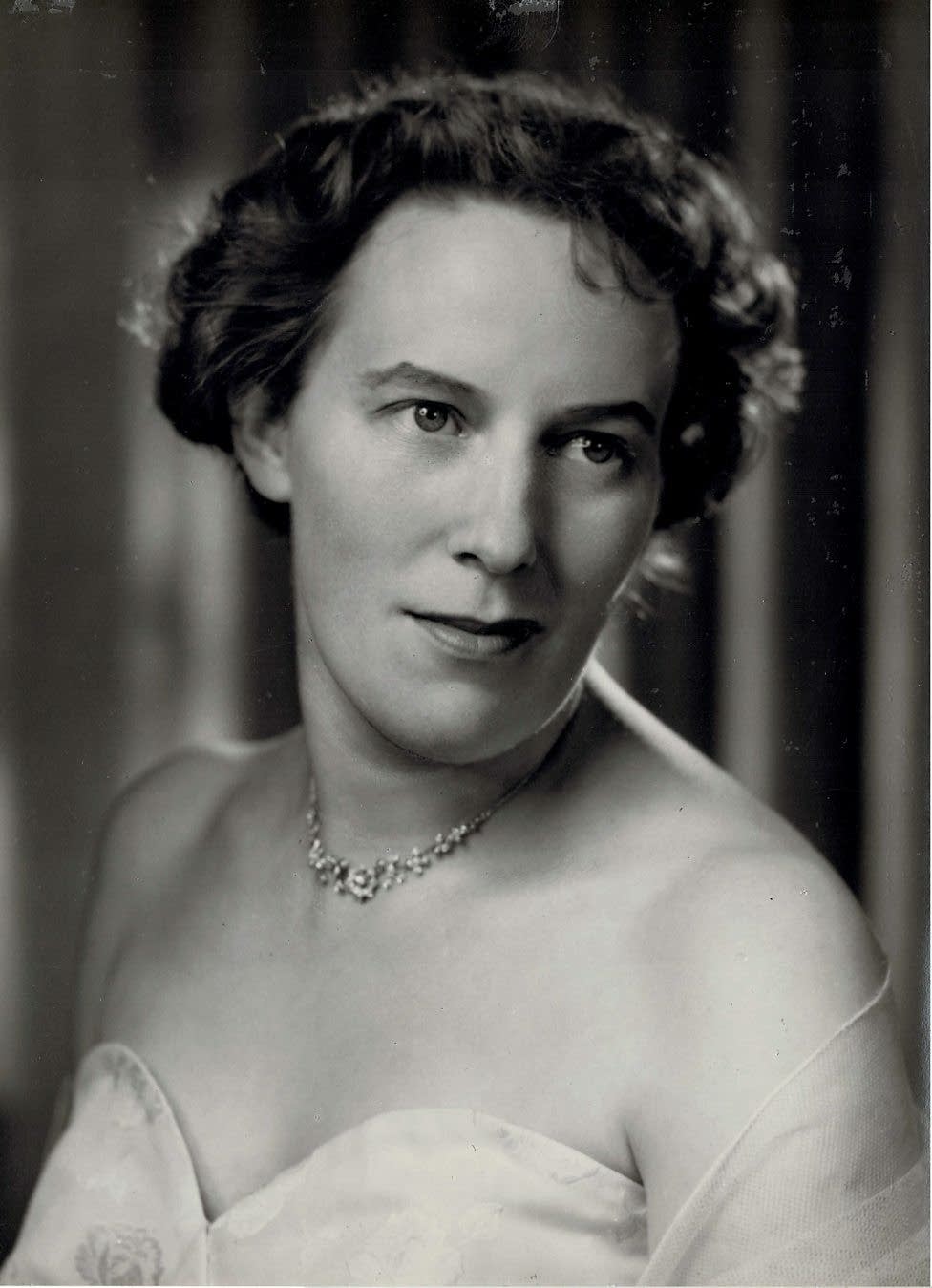
Ruth Gipps was an English composer whose lifespan (1921-1999) almost completely overlapped with classical modernism. Her own conservatism wasn’t a throwback like Beach’s but kept to the path of the 20th century English mainstream—she studied with Ralph Vaughan Williams and had Arthur Bliss as an advocate.
There’s a connection with Vaughan Williams in the shape and direction of her terrific Symphony No. 4. The work sets abstract scenes and is always in motion while free of a specific narrative, and she has that VW technique of using the end of one phrase as an immediate transition to the next.
But the primary sound that seemed to be in her ears for this work was the symphonies of Arthur Honegger—this four-movement symphony is full of his details of rhythms, phrase shapes, and orchestration.
That’s a terrific example of mainstream modernism to follow, and Gipps’ Fourth Symphony is full of light, space, and color. Even the dense passages of the opening and finale movements felt expansive, full but not thick, and the Adagio offered not a ballad but a time for repose.
This is humanist, communicative music, full of joy and intriguing to hear in this rich and satisfying performance.
The New York Repertory Orchestra plays Puccini, Peter Mennin, and Mieczysław Karłowicz’s Violin Concerto with soloist Rachel Lee Friday, 8 p.m., November 22. nyro.org
Leave a Comment