Critic’s Choice
Music of Prokofiev, Still, Ginastera, Blache. Sphinx Virtuosi. October 17.
The Detroit-based Sphinx Virtuosi lights up Carnegie Hall annually with music mostly of the Americas, served with professional polish and populist energy. October’s program with cello soloist Sterling Elliott promises some truly virtuosic goings-on, including (no kidding) a string-orchestra arrangement of Prokofiev’s knuckle-busting Piano Sonata No. 7, relieved (one hopes) by the New York premiere of Quenton Xavier Blache’s Visions of Peace. carnegiehall.org (DW)
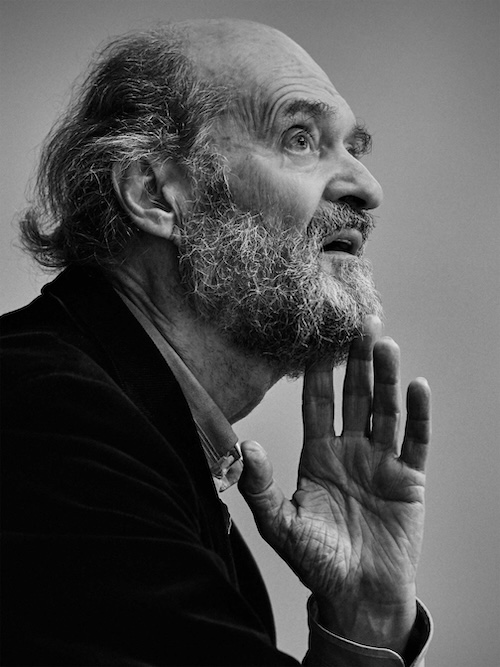
Music of Arvo Pärt. Paavo Järvi/Estonian Festival Orchestra. October 23.
Arvo Pärt, one of the great composers of the last half-century and probably the most performed living composer in the 21st century, turns 90 on September 11. Among multiple celebrations in concert and on recordings, this is the one to see, with Paavo Järvi leading ensembles and soloists—including Midori and Nico Muhly—in a program that incudes the great masterpieces Cantus in memoriam Benjamin Britten, Fratres, and Tabula Rasa. Carnegie Hall (GG)
Günther Groissböck and Julius Drake. Carnegie Hall. December 7.
Renowned worldwide for his Baron Ochs in Der Rosenkavalier, Austrian bass Günther Groissböck makes his Carnegie Hall recital debut performing songs by Schumann, Bruckner, Wolf, Mahler, and Strauss. Also on the program are seldom-encountered songs by Hans Rott, whom Mahler declared “a musician of genius … who died on the very threshold of his career.” carnegiehall.org (RP)
“What Is Your Hand in This?” Davóne Tines and Ruckus. January 30, 2026.
Carnegie Hall is offering many takes on our national experiment in its programming theme “United in Sound: America at 250,” but for hot current talent and fresh perspectives it may be hard to beat this exploration of centuries-old songs, hymns and ballads along with new works, curated and performed by bass-baritone Davóne Tines and the no-limits period-instruments ensemble Ruckus, in Carnegie’s Zankel Hall. carnegiehall.org (DW)
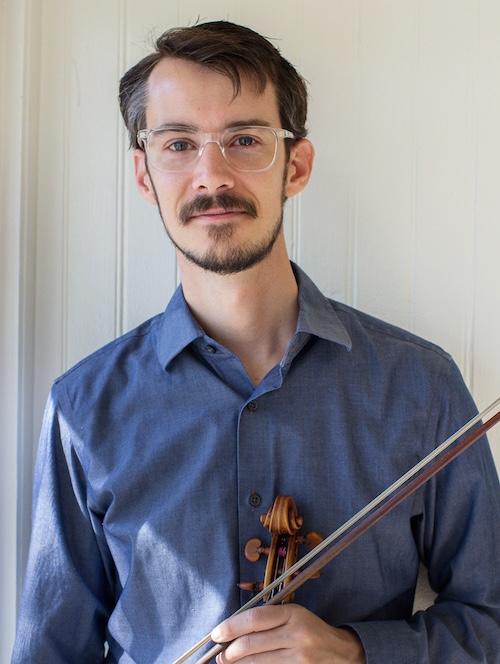
Andrew McIntosh Composer Portrait. Miller Theatre. February 5.
Composer Andrew McIntosh stands out from the landscape of contemporary music makers by crafting pieces that combine sharply etched music with atmospheric and site-specific field recordings to make a living soundscape. This Composer Portrait concert features the similarly singular ensemble Yarn/Wire playing a McIntosh world premiere, an excerpt from his large-scale Little Jimmy, and more. Miller Theatre. (GG)
Kurtág @ 100. AXIOM/Julliard New Series. February 19.
György Kurtág has been hailed as “one of the last living links to the defining postwar composers of the European avant-garde.” The Juilliard School will celebrate the Hungarian composer’s 100th birthday with a performance of his music by AXIOM led by Jeffrey Milarsky. Works to be performed include Kurtág’s Brefs Messages; Kafka-Fragmente, Parts III and IV; and … quasi una fantasia …. juilliard.edu (RP)
Ned Rorem: Evidence of Things Not Seen. Brooklyn Art Song Society. March 8.
Time magazine called Ned Rorem “the world’s best composer of art songs.” He was not only acclaimed but prolific, with 500 songs in his catalog. One encounters Rorem’s songs less often on recital now than in the past, but he is hardly forgotten. Brooklyn Art Song Society will present a performance of his massive cycle, Evidence of Things Not Seen. Composed in 1997, the work contains settings of 36 poems by 24 authors. Most are by American poets, but Rorem was nothing if not eclectic, so there are also settings of poems by writers ranging from Auden to Baudelaire. brooklynartsongsociety.org (RP)
Beethoven’s Eroica and Fred Rzewski’s The People United Will Never Be Defeated. Gustavo Dudamel/New York Philharmonic. March 12-17.
Though he’s not yet officially music director of the New York Philharmonic, Gustavo Dudamel is already steering the orchestra in exciting directions, and he and the musicians have a palpable chemistry. This program is a perfect mix of revolutionary music for a revolutionary country, not just the Eroica but the world premiere of multiple composers’ orchestrations of the monumental The People United. David Geffen Hall. (GG)
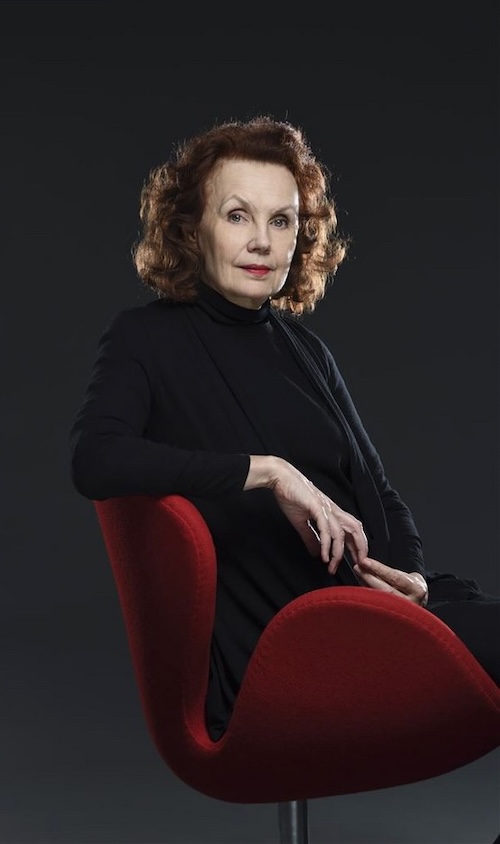
Kaija Saariaho’s Innocence. Metropolitan Opera. April 6-29.
There are several enticing premieres and new productions at the Metropolitan Opera this season, and the most intriguing and involving is the New York premiere of Saariaho’s final opera. Built around the wrenching and unfortunately relevant subject of the aftermath of a school shooting, this staging stars mezzo-soprano Joyce DiDonato and Finnish pop singer Vilma Jää. Susanna Mälkki conducts. Metropolitan Opera. (GG)
“O Jerusalem!” Apollo’s Fire. April 12, 2026.
The ancient city, “crossroads of three faiths” (as this program’s subtitle says) and of many more musical traditions, will come to life in a rush of love songs, dances, prayers and jubilation from all points of the historical compass, under the aegis of New York’s venerable Music Before 1800 series. This ensemble, led by its founding director Jeannette Sorrell, brings a 30-year track record of vital period-instrument performances to a refreshingly different kind of Easter and Passover celebration. mb1800.org (DW)
Leave a Comment